Great Ocean Road weather and what to wear
The coast is milder than Melbourne in summer and wet in winter. Cape Otway averages highs of 21.5 °C in January and 13 °C in July, and some rain falls on 130 days of the year.

The Great Ocean Road faces the Southern Ocean and Bass Strait, and its weather follows the sea more than the city. Summers are mild rather than hot, winters cool and wet, and showers can come through in any month. The nearest long-term weather station to the Twelve Apostles is at the Cape Otway Lighthouse, where the Bureau of Meteorology has recorded temperatures since 1864. Its averages are a good guide to the central coast; Port Fairy, at the western end of the region, is a little warmer in summer and drier over the year.
Temperatures and rain through the year
| Month | Average high | Average low | Rain | Rain days |
|---|---|---|---|---|
| January | 21.5 °C | 13.5 °C | 44 mm | 6 |
| February | 21.5 °C | 14.0 °C | 41 mm | 5 |
| March | 20.3 °C | 13.3 °C | 55 mm | 8 |
| April | 18.0 °C | 11.7 °C | 70 mm | 11 |
| May | 15.6 °C | 10.1 °C | 91 mm | 13 |
| June | 13.7 °C | 8.5 °C | 97 mm | 14 |
| July | 13.0 °C | 7.6 °C | 106 mm | 15 |
| August | 13.8 °C | 7.9 °C | 103 mm | 16 |
| September | 15.2 °C | 8.6 °C | 90 mm | 14 |
| October | 16.9 °C | 9.6 °C | 81 mm | 12 |
| November | 18.3 °C | 10.8 °C | 63 mm | 9 |
| December | 19.9 °C | 12.1 °C | 52 mm | 8 |
Two things stand out. The range is narrow: the warmest month is only about eight degrees warmer than the coldest, and summer nights average 12 to 14 °C. And the coast is wetter than Melbourne, with 893 mm a year at Cape Otway against 648 mm in the city centre, and 131 rain days against 100. In January the gap goes the other way for temperature: the city averages 25.9 °C, more than four degrees above the cape, so a hot day in Melbourne can still mean a jacket at the lookouts.
On the clifftops
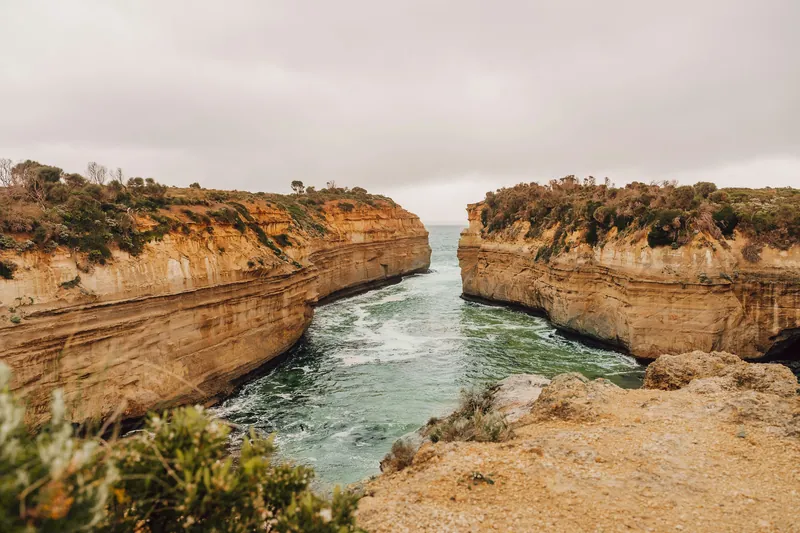
The viewing platforms at the Twelve Apostles, Loch Ard Gorge and London Bridge stand on open clifftops above the sea. Bring a windproof outer layer even on a sunny day, and something to keep the spray off a camera. Stay on the platforms and inside the signed areas; at London Bridge the viewing area for The Arch is closed because of unstable cliffs and track erosion. Beach access at Gibson Steps depends on the weather, the tide and safety conditions, so check the signs before you go down.
What to pack
For most of the year, dress in layers: a T-shirt or thin top, a fleece or warm jumper and a jacket that keeps out wind and rain. Between May and September, when Cape Otway averages 13 to 16 rain days a month, a proper waterproof is the most useful thing in your bag. Wear shoes with grip. The park authority warns that the path to the foot of Erskine Falls is slippery after rain (the falls are temporarily closed at the time of writing), and the Great Ocean Walk warns of stairs, steep climbs and descents and sections that turn wet and muddy.
In summer, add a hat, sunglasses and sunscreen for the hours at the beaches and lookouts, and carry water. On days of extreme heat, check the Fire Danger Rating; the CFA asks travellers to look at the forecast daily over summer.
Dressing for a day tour
Day tours from Melbourne last 11 to 13.5 hours, leave in the morning and return in the evening, so one outfit has to cover a mild afternoon on the coast and a cool evening on the way back. A warm layer in a day bag solves that; one tour asks for a single bag of no more than 5 kg. A review of a classic coach tour in May mentions an unheated bus in winter, which is another reason to bring a fleece. In winter, sunset at the Apostles is around 5:15 pm and the light fades soon after, which makes the evening stops colder.
On the beach and in the water
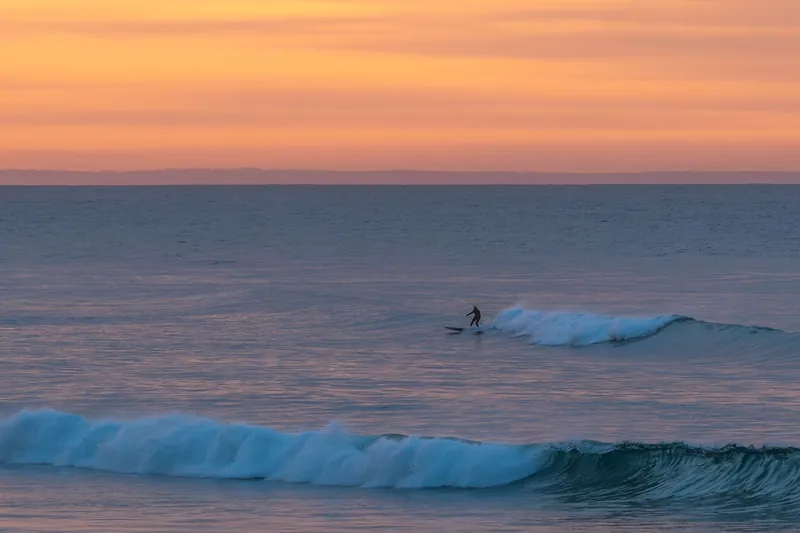
Surf conditions vary along the coast, and at Kennett River the park authority describes the surf as suitable only for experienced surfers. Surf Life Saving Australia advises swimming only at patrolled beaches between the red and yellow flags, and lifesavers are on duty only while those flags are up. At Torquay, Back Beach, Jan Juc, Cosy Corner and Fishermans Beach are patrolled in the warmer months. The surf schools provide wetsuits for their lessons; bring swimwear and a towel. If you are caught in a rip, stay calm, raise an arm and call for help, or swim parallel to the beach. Emergencies are 000.
The season guide covers daylight, whales and school holidays month by month.
Questions travellers ask
What is the weather like on the Great Ocean Road?
Mild and changeable. At Cape Otway the long-term average high ranges from 13 °C in July to 21.5 °C in January and February, and rain falls on five to sixteen days a month depending on the season.
Is it colder on the Great Ocean Road than in Melbourne?
In summer, yes. Average January highs are about 25.9 °C in central Melbourne and 21.5 °C at Cape Otway. In winter the two are similar, at around 13 to 14 °C, but in July the coast has about 15 rain days against about 10 in the city.
What should I wear on a Great Ocean Road day tour?
Layers, a wind- and rainproof jacket and shoes with grip for wet steps and lookout paths. In summer add a hat and sunscreen. Day tours last 11 to 13.5 hours, so a warm layer for the evening is worth packing.
Can I go down to the beach at the Twelve Apostles?
Gibson Steps lead down to a wild beach below the cliffs when conditions allow, but access depends on weather, tides and safety conditions. For a swim, choose a patrolled beach such as Torquay Back Beach and stay between the red and yellow flags.
When is the rainiest time on the Great Ocean Road?
From May to September. Cape Otway averages 13 to 16 rain days a month in that period, with the most in July and August, while January and February have about five or six.
Where these facts come from
Dates, opening hours and rules change. We checked these pages in October 2026; the official source has the final word.
- Bureau of Meteorology: Climate statistics, Cape Otway Lighthouse
- Bureau of Meteorology: Climate statistics, Melbourne Regional Office
- Bureau of Meteorology: Climate statistics, Port Fairy AWS
- US Naval Observatory: Sun data for the Twelve Apostles
- Surf Life Saving Australia: Rip currents
- CFA: Staying safe when you travel
- Great Ocean Road Coast and Parks Authority: Gibson Steps
- Great Ocean Road Coast and Parks Authority: Great Ocean Walk
- Great Ocean Road Coast and Parks Authority: Erskine Falls
- Visit Great Ocean Road: Patrolled beaches in Torquay
- Tour pages on GetYourGuide, checked 2 November 2026